

 United States
National Apple Strudel Day
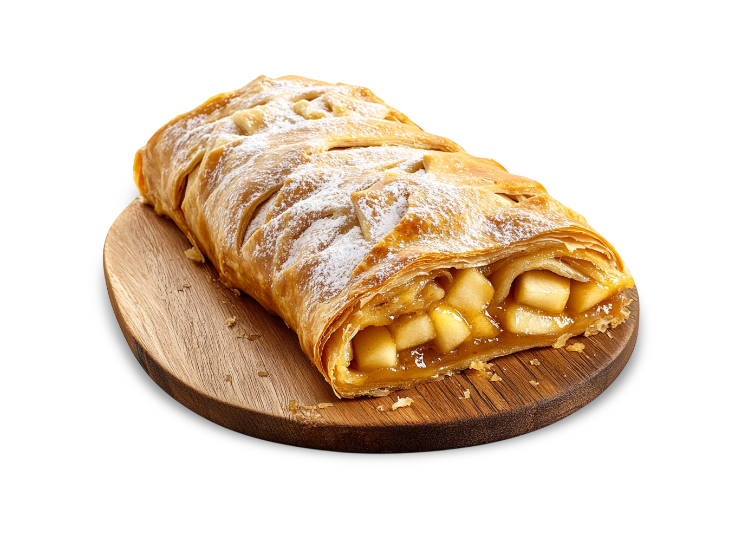
Apple strudel, a layered pastry filled with apples, is a beloved dish with a rich history. The name "strudel" comes from the German word for "whirlpool" or "eddy," referring to its distinctive swirling layers. Though often mistaken for being of German origin, apple strudel is actually Austrian, with the oldest known recipe dating back to 1697, preserved in a handwritten Viennese cookbook. Strudel's origins trace back even further, likely influenced by the paper-thin pastry techniques used in Turkish baklava and Greek yufka. The dish evolved as it traveled westward, eventually becoming a staple in the kitchens of the Austro-Hungarian Empire during the 18th century. Vienna, known for its vibrant café culture, played a key role in refining the delicate art of stretching strudel dough until it was nearly translucent. A traditional apple strudel consists of thinly sliced apples, cinnamon, sugar, and sometimes raisins, wrapped in layers of unleavened dough. The dough is carefully rolled and baked until golden brown, often served with powdered sugar, whipped cream, or vanilla ice cream. While apple strudel remains the most iconic, variations include cheese, apricot, poppy seed, and even savory fillings like spinach. Today, nearly every Austrian family has its own take on the dish, cementing its status as a cultural treasure enjoyed worldwide.
Read the story