
 United States
National Cassoulet Day
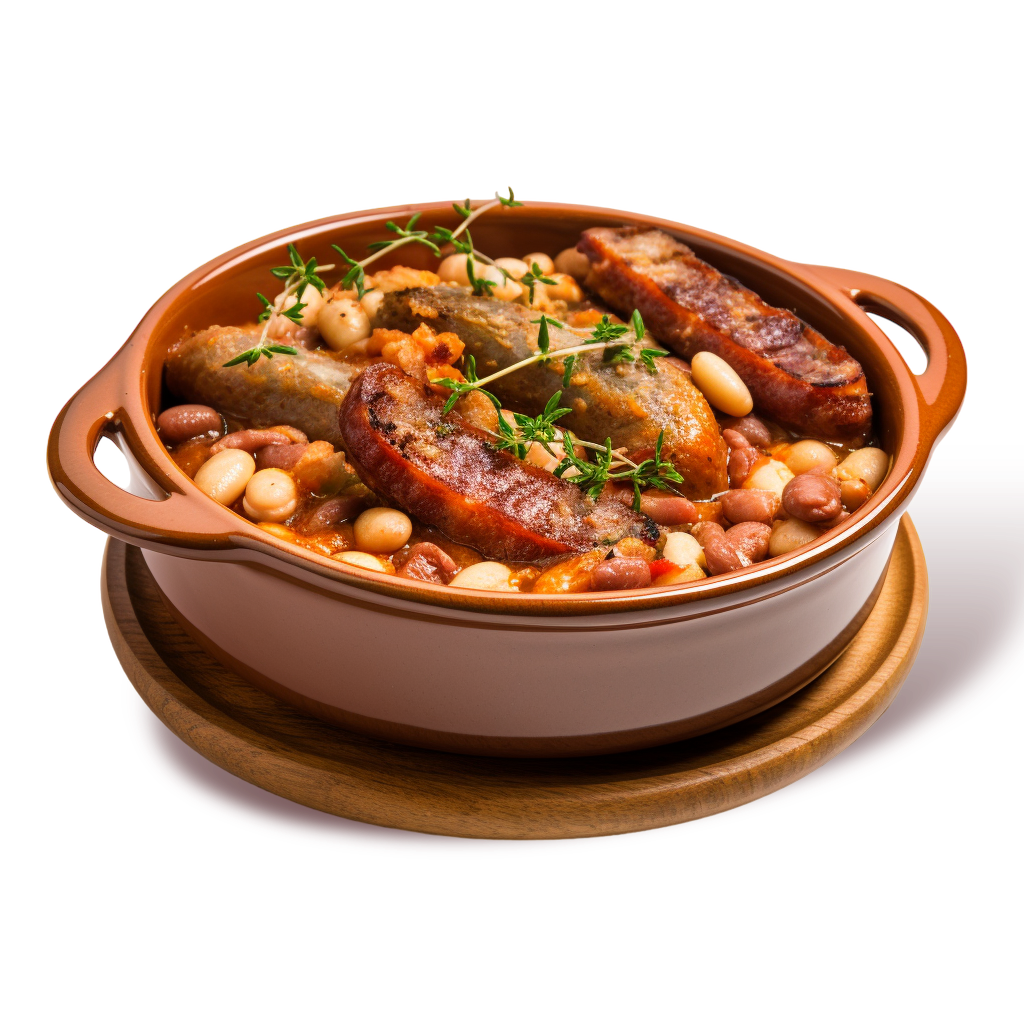
Around 1355, the town of Castelnaudary was under British siege as part of the Hundred Years’ War, and the locals had to get creative. They tossed together whatever they could find and made a stew that became the famous cassoulet. Cassoulet (French: cassole d’Issel) is a traditional French dish made of white beans and various types of meat, usually pork or duck and sausage and flavorful broth slow-cooked in a clay pot. The beans are usually white beans, such as great northern or cannellini beans, and the broth is typically made with tomatoes and garlic, which give the dish its signature flavor. The 19th century saw the introduction of cassoulet into elite Parisian bistros after it was initially seen as a meal for peasants and not a component of haute cuisine. Three brothers from Marseille built the Restaurant des Frères Provençaux, which was the first restaurant to serve Parisians bouillabaisse and cassoulet, two of the finest southern French dishes, which are exclusive to Marseille. The early 20th-century French restaurant guide “Le Tour Gastronomique de France,” which served as an inspiration for the Michelin Guide of today, singled out the cassoulet at the Castelnaudary restaurant for acclaim. The sanctity of cassoulet has remained in Castelnaudary, in part by conducting surprise taste tests of the cassoulets offered by local chefs. There is an Academie Universelle du Cassoulet, whose members promote the cassoulet and its significant cultural heritage (they even have a theme song).
Read the story