

 United States
National Buttercrunch Day
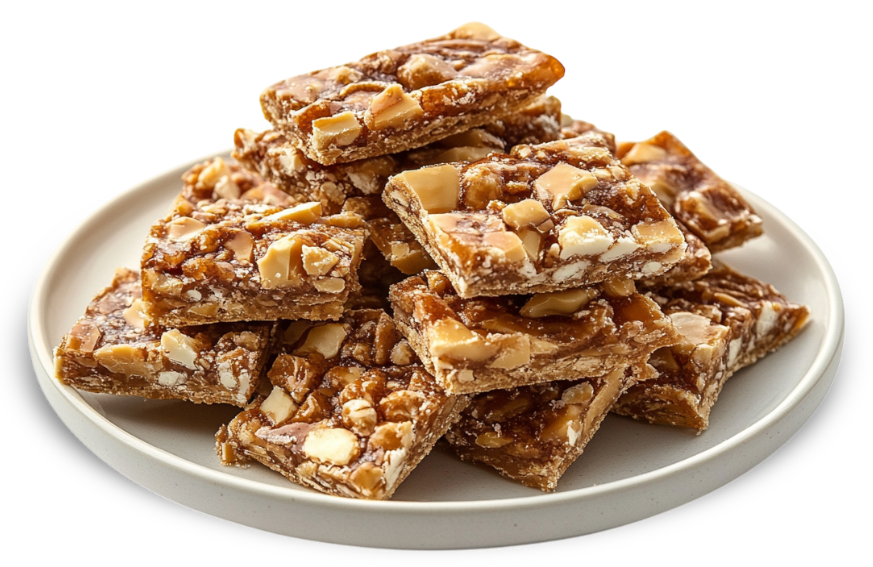
Did you know buttercrunch candy played a sweet role during World War II? Its ease of shipment made it a popular treat to send to soldiers overseas, offering them a comforting taste of home. One iconic form, Almond Roca, was created by the Seattle-based company Brown & Haley. Wrapped in signature gold foil and packaged in tins, it stayed fresh and delicious, ready to brighten the day of anyone lucky enough to receive it. Buttercrunch itself is a delightful concoction of caramelized sugar, butter, and almonds, boiled to the hard-crack stage—roughly 300°F (149°C). The result is a candy with a satisfyingly crisp bite. Almond Roca takes things a step further, dipping the toffee in chocolate and rolling it in crumbled almonds for its distinctive look and irresistible taste. Though often called "English toffee," buttercrunch is an American creation with its own unique twist. Traditional English toffee is made with brown sugar and lacks the nutty coating that gives buttercrunch its signature crunch. The origins of buttercrunch can be traced back to Northern Europe, thanks to the region’s rich butter-making traditions, but it truly came into its own in the United States in the early 20th century. In 1923, Brown & Haley introduced Almond Roca, naming it after the Spanish word roca (rock) to highlight its texture. The company’s decision to use tins for packaging wasn’t just a stroke of genius for freshness, it also proved practical during the war years. Soldiers’ care packages often included tins of Almond Roca, helping the candy gain nationwide fame and a special place in American hearts.
Read the story