
 United States
National Sticky Bun Day
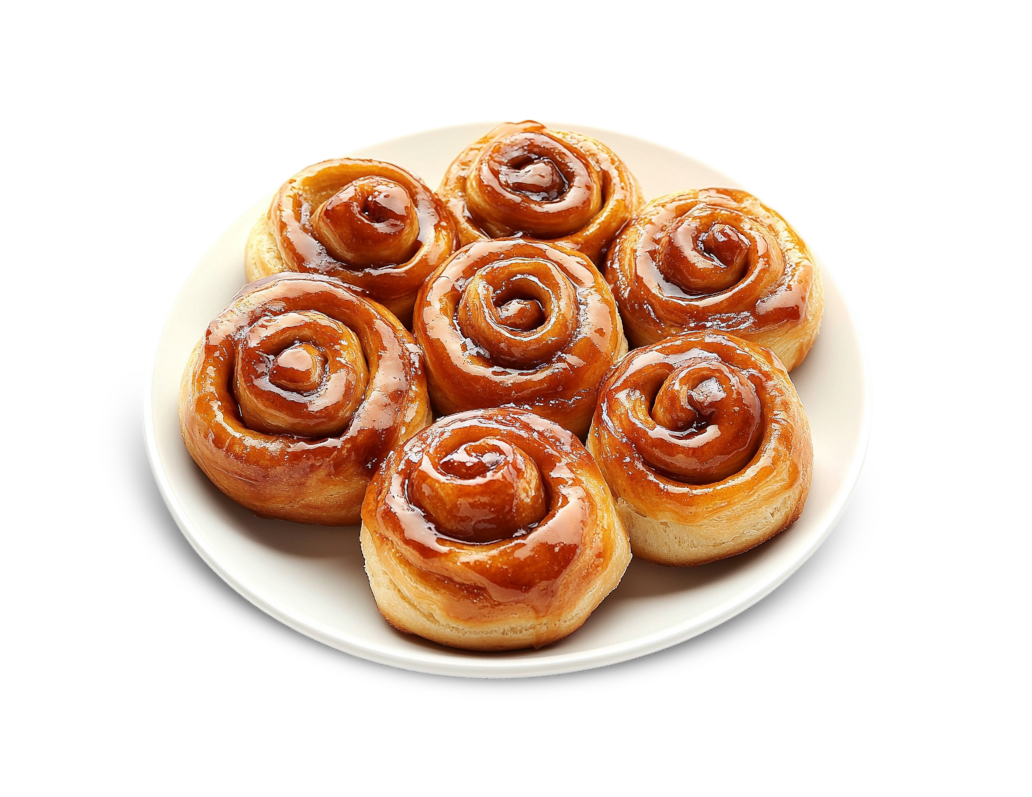
Some historians trace sticky buns back to ancient Egypt, where honey and nuts were added to bread to create a sweet, flavorful treat. Over the centuries, this idea spread and evolved, with variations appearing throughout Europe during the Middle Ages. Spices like cinnamon became more widely available, adding a warm, aromatic touch to these early versions of sticky buns. Fast forward to the 1700s, when German immigrants, often referred to as the Pennsylvania Dutch (from “Deutsch,” meaning German), brought their beloved schnecken to America. These early sticky buns were a specialty in Philadelphia, where they became a cultural staple and gained their current sticky-sweet reputation. Confused about the difference? You’re not alone! While sticky buns and cinnamon rolls share some similarities, there are a few key distinctions: - Sticky buns almost always include nuts, typically pecans, baked into the caramel glaze. - Sticky buns are baked with a sticky, sugary syrup on the bottom of the pan, which becomes their gooey topping after being flipped. Cinnamon rolls, on the other hand, are topped with a powdered sugar glaze. Traditionally made with leavened dough rolled with brown sugar and cinnamon, they’re baked over a sticky mixture of honey, butter, sugar, and pecans. Once flipped out of the pan, their sticky base becomes a luscious topping that makes every bite irresistible.
Read the story