

 United States
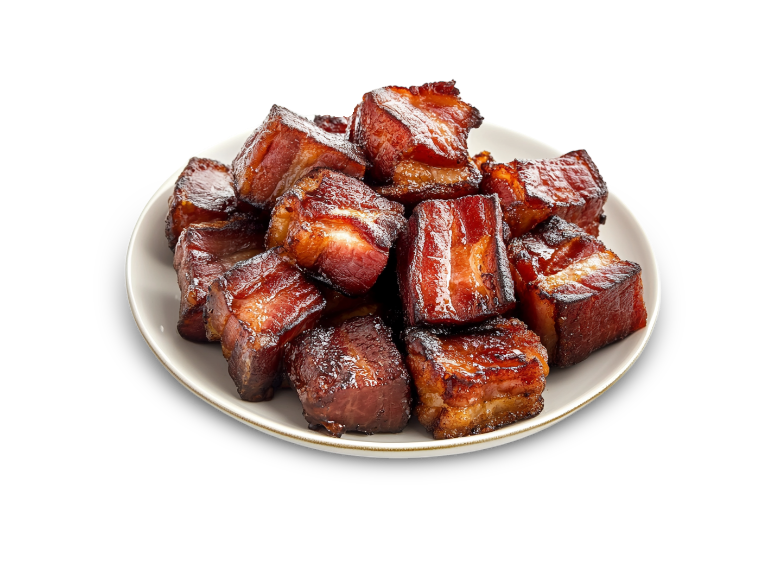
National Bacon Burnt End Day
Bacon’s origins trace back to two million years ago when pigs first emerged in Southeast Asia. Around 10000 B.C., early humans hunted wild boars, later domesticating pigs for safety. By 1500 B.C., the Chinese pioneered the use of salt to preserve meat, a breakthrough that helped bacon’s development. Central European farmers discovered that curing pigs with nitrate-rich salt from local mines led to the creation of early bacon. Unlike modern bacon, which is typically made from pork belly, the term “bacon” originally referred to various cuts of the pig, potentially including the back. In 1607, Sir Walter Raleigh introduced pigs to Jamestown, and the English soon followed by importing pigs to their American colonies. By the 1770s, John Harris established the world’s first commercial bacon operation in Wiltshire, and in the 1930s, the UK imported the majority of bacon and ham, with Danish bacon reigning supreme. National Bacon Burnt Ends Day, founded in 2021 by the American Royal Association of Kansas City, celebrates the city's unique BBQ tradition, especially its famous burnt ends, a flavorful dish evolved from discarded brisket tips. This day highlights Kansas City's role in the history of bacon and barbecue.
Read the story